Monitoring Tools That Alert Before Your Users Do
An incident you discover after your customers costs trust. We selected 6 monitoring tools on alerting speed, dashboard flexibility, and trace correlation.
At MG Software we combine Grafana with Prometheus as our primary monitoring stack for Kubernetes environments. For error tracking we use Sentry due to its excellent developer experience. For clients seeking a fully managed solution we recommend Datadog, which combines everything in one powerful platform. This combination covers all our monitoring needs.
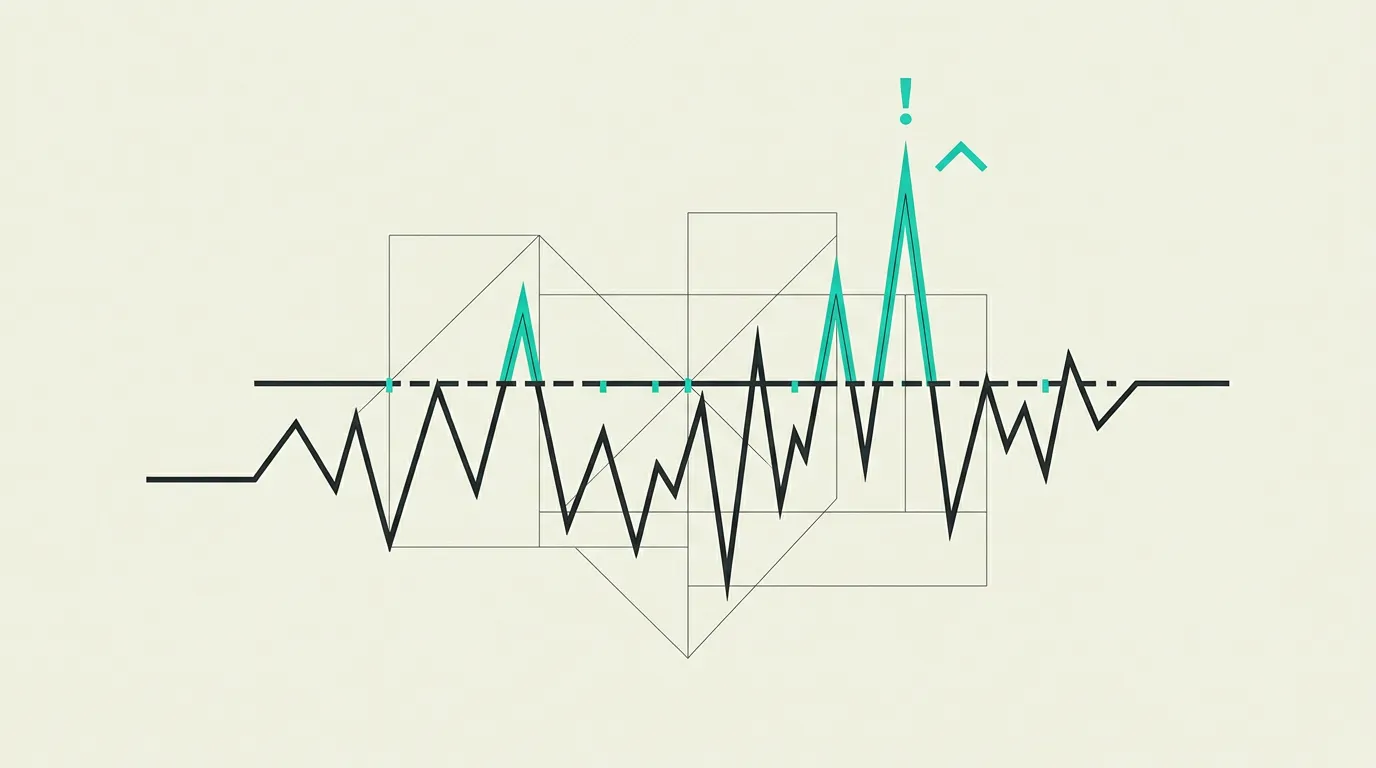
Monitoring and observability are essential for ensuring the health of your applications and infrastructure. Every minute of downtime costs not only money but also user trust. The right monitoring tool gives you real-time insight into performance, helps quickly identify issues, and prevents small anomalies from escalating into full outages. The distinction between monitoring and observability matters: monitoring tells you when something is broken, observability helps you understand why. In 2026 most platforms expect you to cover all three pillars: metrics for trends, logs for context, and traces for following requests through your entire stack. In this guide we compare six leading monitoring tools based on functionality, integration capabilities, scalability, and cost. We ran each tool for three months on our own Kubernetes clusters and evaluated alerting speed, dashboard flexibility, and actual costs at realistic data volumes. From fully managed platforms to open-source solutions, we help you make the best choice for your team.
How did we select these tools?
We ran each monitoring tool in parallel on the same Kubernetes cluster for three months and compared alerting reliability, query speed, storage costs, and dashboard flexibility. Integration depth with our CI/CD pipeline and incident-response workflow was scored separately.
How do we evaluate these tools?
- Breadth of monitoring: metrics, logs, traces, and error tracking
- Integration capabilities with cloud providers, containers, and CI/CD pipelines
- Dashboarding and alerting functionality
- Scalability with growing infrastructure
- Value for money and availability of free tiers
- AI-powered anomaly detection and automatic root cause analysis
1. Datadog
All-in-one observability platform that combines metrics, logs, traces, and security monitoring in a single interface. Datadog offers 750+ integrations, Watchdog AI for automatic anomaly detection, and powerful dashboards for monitoring your full stack. Pricing starts at $15 per host per month for infrastructure monitoring; APM costs $31 per host per month. The platform is used by companies like Samsung, Airbnb, and Peloton.
Pros
- +Comprehensive all-in-one observability with 750+ ready-to-use integrations
- +Powerful drag-and-drop dashboards with advanced multi-channel alerting
- +Excellent APM and distributed tracing with service maps and flame graphs
- +Watchdog AI automatically detects anomalies without manual threshold configuration
- +Real-time log analytics with pattern recognition and trace correlation
Cons
- -Costs add up fast: a team with 20 hosts and APM already pays $600+ per month
- -Complex pricing structure with separate modules for logs, APM, security, and synthetics
- -Can be overwhelming for small teams due to the sheer number of features
- -Data ingestion limits on cheaper plans require careful filter management
2. Grafana
Open-source visualization and dashboard platform that excels at combining data from multiple sources into unified dashboards. Grafana integrates seamlessly with Prometheus, Loki (logs), Tempo (traces), InfluxDB, and dozens of other data sources. Grafana Cloud offers a managed option with a free tier including 10,000 metric series, 50 GB logs, and 50 GB traces per month. The Pro plan starts at $29 per user per month.
Pros
- +Fully open-source with a community of 60,000+ GitHub stars
- +Unmatched flexibility in dashboarding with support for 100+ data sources
- +Free self-hosted option with full functionality available
- +Grafana Cloud offers a generous free tier for small teams
- +Alerting directly from dashboards with support for Slack, PagerDuty, and more
Cons
- -Requires additional tools for data collection and storage (Prometheus, Loki, Tempo)
- -Setup and maintenance of the full LGTM stack can be complex without DevOps experience
- -Less out-of-the-box functionality than all-in-one platforms like Datadog
- -Dashboard performance can degrade with very complex queries over large time ranges
3. New Relic
Full-stack observability platform with a generous free tier of 100 GB data ingestion per month and one free full-platform user. New Relic offers APM, infrastructure monitoring, log management, browser monitoring, and synthetic monitoring in one platform. The transparent pricing model charges $0.35 per GB of extra ingestion and $49 per month per additional full-platform user, making it more predictable than competitors.
Pros
- +Generous free tier: 100 GB per month and one free full-platform user
- +Comprehensive full-stack observability without buying separate modules
- +Simple transparent pricing model: pay per GB and per user
- +NRQL query language provides powerful ad-hoc analysis across all telemetry data
- +Errors Inbox automatically groups and prioritizes errors per service
Cons
- -Interface can feel slow for complex NRQL queries over large datasets
- -Per full-platform user costs ($49/month) add up for larger teams
- -Less deep Kubernetes monitoring than Datadog or Prometheus
- -Historical data retention is limited without additional storage options
4. Prometheus
Open-source monitoring and alerting toolkit that has become the industry standard for Kubernetes and cloud-native monitoring. Prometheus uses a pull-based model for collecting metrics, offers the powerful PromQL query language, and natively integrates with Kubernetes via service discovery. It is part of the Cloud Native Computing Foundation (CNCF) and is backed by companies like Google and Red Hat. For long-term storage you can add Thanos or Cortex.
Pros
- +The industry standard for Kubernetes monitoring with native service discovery
- +Powerful PromQL query language for advanced analyses and calculations
- +Fully open-source and community-driven under CNCF governance
- +Alertmanager provides flexible alert routing, grouping, and silencing
- +Massive ecosystem of exporters for virtually every technology
Cons
- -Metrics only: you need Loki or Elasticsearch for logs and Tempo for traces
- -Limited long-term storage without extensions like Thanos or Cortex
- -Requires Grafana or other tools for visualization and dashboarding
- -Operational management of Prometheus clusters requires Kubernetes experience
5. Dynatrace
AI-powered observability platform that automatically monitors your entire stack and detects problems with the Davis AI engine. Dynatrace uses OneAgent technology that automatically discovers every service, process, and dependency without manual configuration. The platform is particularly strong in complex enterprise environments with hundreds of microservices. Pricing starts around $21 per host per month for infrastructure; full-stack costs $69 per host per month.
Pros
- +Davis AI automatically detects problems and identifies root causes within seconds
- +OneAgent automatically discovers and instruments all services and dependencies
- +Deep code-level insights down to method level without manual instrumentation
- +Smartscape automatically visualizes all dependencies across your entire stack
- +Session Replay shows exactly what users experience during performance issues
Cons
- -Premium pricing: full-stack monitoring costs $69 per host per month
- -Can be overkill for smaller applications with limited infrastructure
- -Vendor lock-in due to proprietary OneAgent and Davis AI technology
- -Custom dashboarding is less flexible than Grafana or Datadog
6. Sentry
Specialized error tracking and performance monitoring platform that excels at detecting and diagnosing application errors in frontend and backend code. Sentry provides detailed stack traces with source code context, breadcrumbs showing what preceded the error, and release tracking to identify regressions per deployment. The free Developer plan supports 5,000 errors per month; the Team plan costs $26 per month for 50,000 errors.
Pros
- +Best-in-class error tracking with detailed stack traces and source code context
- +Excellent SDKs for 100+ platforms including React, Next.js, Python, and Go
- +Generous free tier with 5,000 errors per month for smaller projects
- +Performance monitoring with transaction tracing and Web Vitals tracking
- +Release health tracking links crashes directly to specific deployments
Cons
- -Primarily focused on error tracking and performance, no infrastructure monitoring
- -Less suitable as a standalone monitoring solution for your entire stack
- -Costs can increase for applications with high error volumes
- -Alerting options are more limited than dedicated monitoring platforms
Which tool does MG Software recommend?
At MG Software we combine Grafana with Prometheus as our primary monitoring stack for Kubernetes environments. For error tracking we use Sentry due to its excellent developer experience. For clients seeking a fully managed solution we recommend Datadog, which combines everything in one powerful platform. This combination covers all our monitoring needs.
How MG Software can help
MG Software sets up complete monitoring stacks tailored to your architecture and budget. For teams with Kubernetes infrastructure we implement Grafana, Prometheus, Loki, and Tempo as an integrated observability stack with pre-configured dashboards and alerting rules. For clients who prefer a managed platform we set up Datadog or New Relic with the right integrations and custom dashboards. Our team configures Sentry for error tracking in all our projects, with release tracking and Slack notifications so your team immediately knows which deployment caused a problem. We make sure you are never caught off guard by downtime.
Frequently asked questions
Need help choosing tools?
We advise and implement the right tools for your stack.
Schedule a consultationRelated articles
Container Orchestration Beyond Just Kubernetes
Kubernetes is the default, but not always the right choice. We evaluated 6 container orchestration tools on complexity, scalability, and operational overhead.
Security Scanners That Catch Vulnerabilities Before Production
Dependency vulnerabilities are the fastest path to a breach. We evaluated 6 security scanning tools on detection speed, false positives, and CI integration.
What is Monitoring? - Definition & Meaning
Application monitoring surfaces problems before users notice them, using Grafana, Datadog, and Prometheus for real-time system visibility.
AWS vs Azure: Which Cloud Platform Should You Choose?
Already on Microsoft licenses? Azure pulls ahead. Purely technical? AWS offers the most. A comparison on services, pricing, and scalability.